Welcome to the Mindfulness + Spirituality Clown Hub
Clowning asks us to be deeply present: to notice what is happening in each moment, attend to the smallest details, respond spontaneously, and meet the world with openness and curiosity. These qualities have echoes in spiritual traditions across cultures, where foolishness, play, paradox, and the disruption of ordinary ways of seeing can become pathways to insight. We can find this in the life and poetry of the Zen monk Master Ryōkan, in the sacred clown and contrary traditions of Indigenous peoples including the Lakota Heyoka and Pueblo Koshare, and in other traditions of the “holy fool,” such as the yurodivy of Russian Orthodox Christianity. This hub explores the intersections between clowning, mindfulness, spirituality, and well-being, bringing together practices, stories, teachings, and reflections that invite us to consider clown not only as a form of performance, but as a way of paying attention, relating, questioning, and being in the world.
Masterclasses
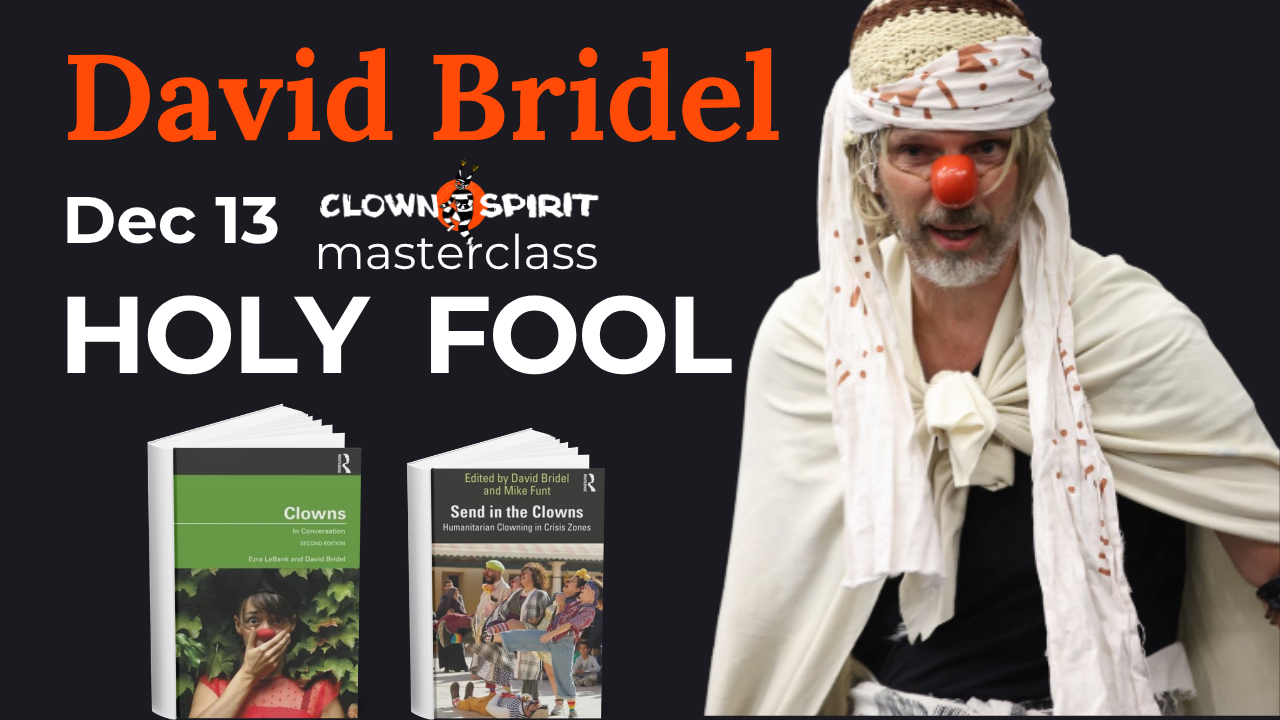
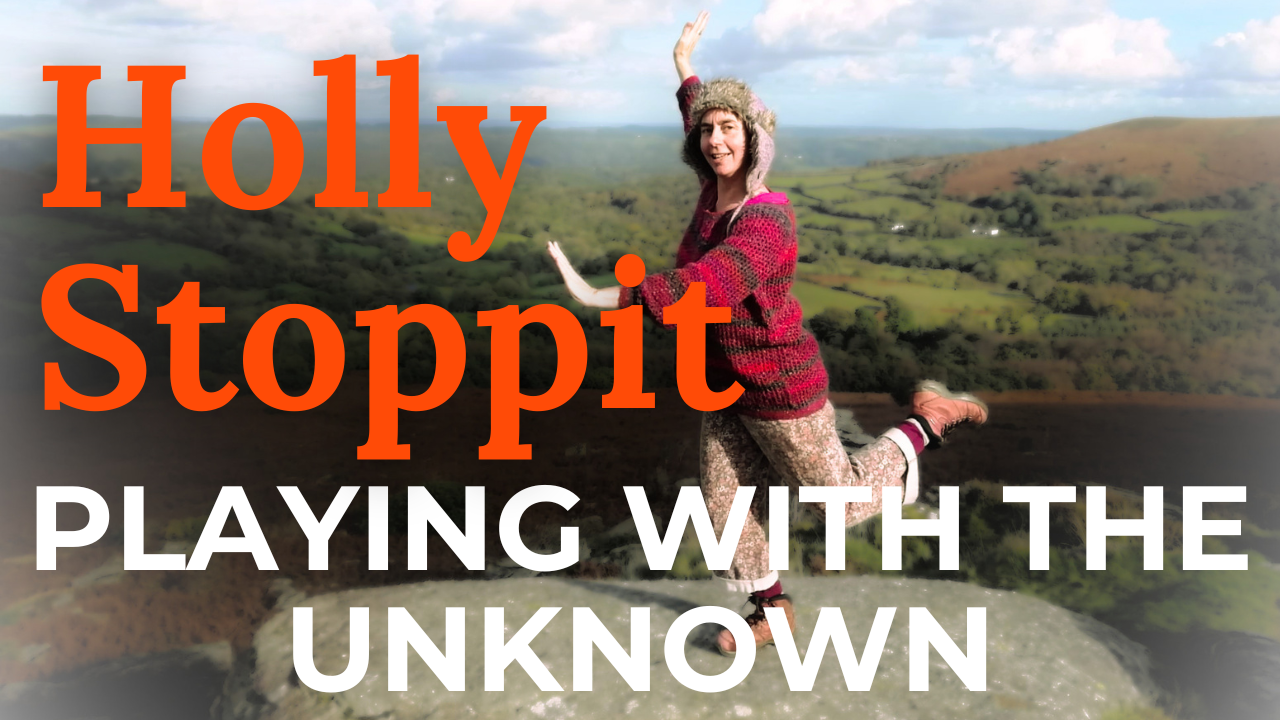
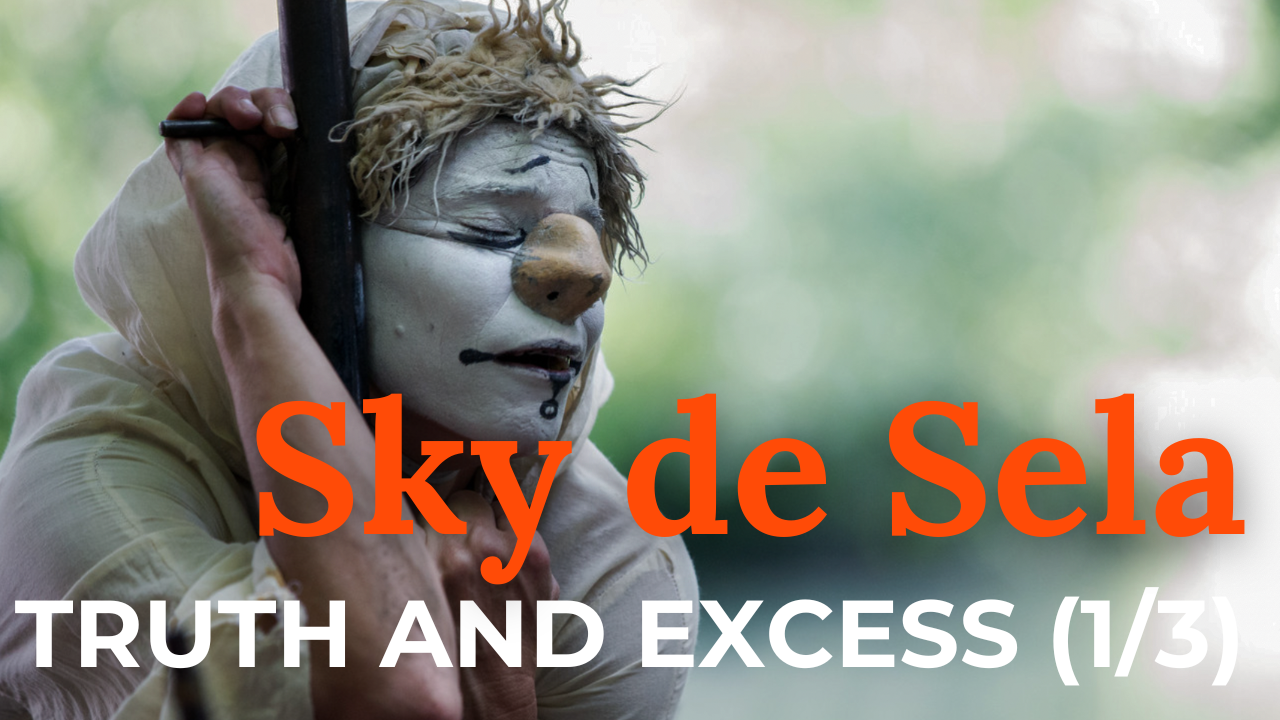
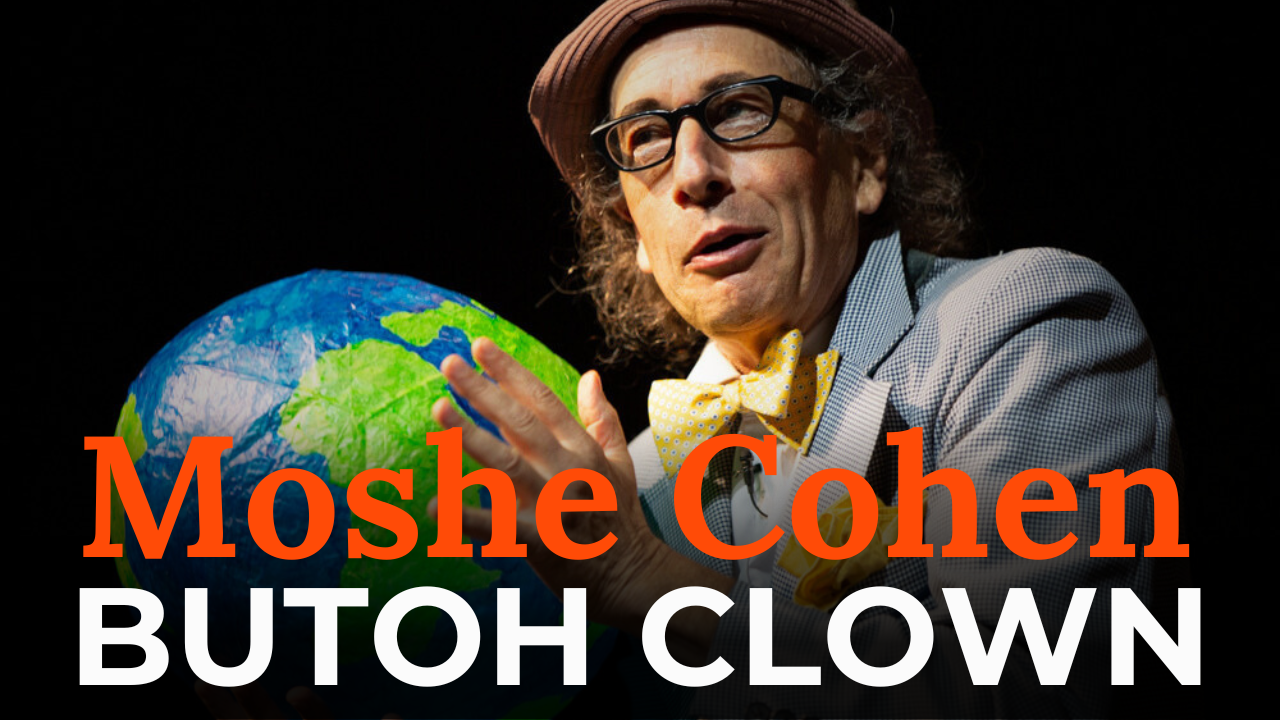
Below are six incredible masterclasses from leaders in Mindful Clowning!
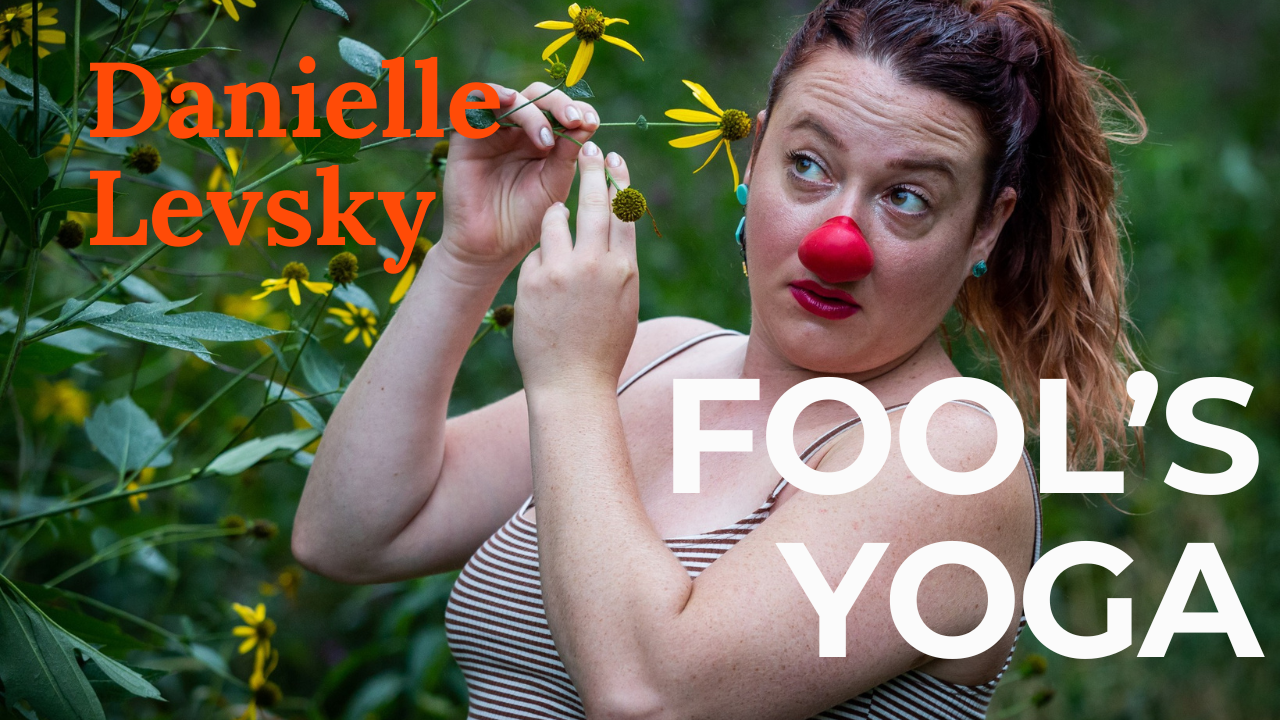
Danielle Levsky
Danielle Levsky (they/she) is a multidisciplinary theater artist, clown teacher, and creator of Fool’s Yoga, a practice that blends yoga, mindfulness, and clowning. Trained at The Clown School and through 200-hour Yoga Alliance certification and study with clown masters, they explore presence, vulnerability, joyful expression, and embodied play as pathways to self-discovery.
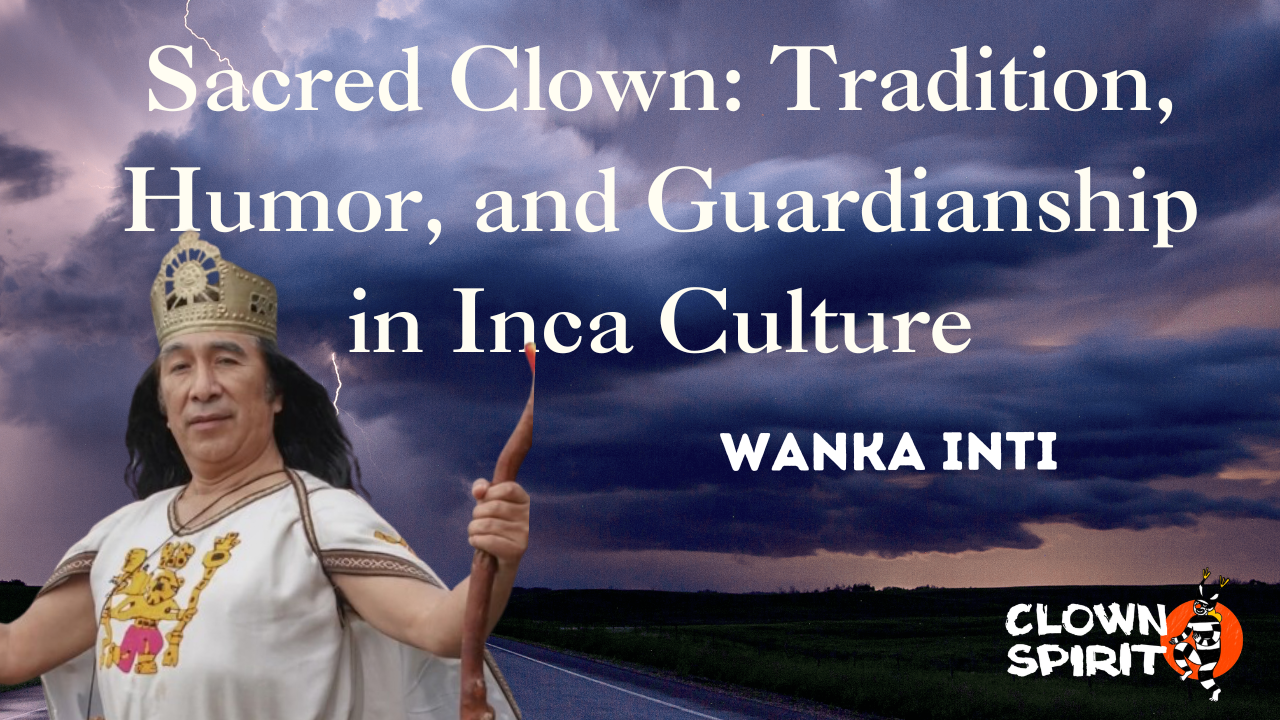
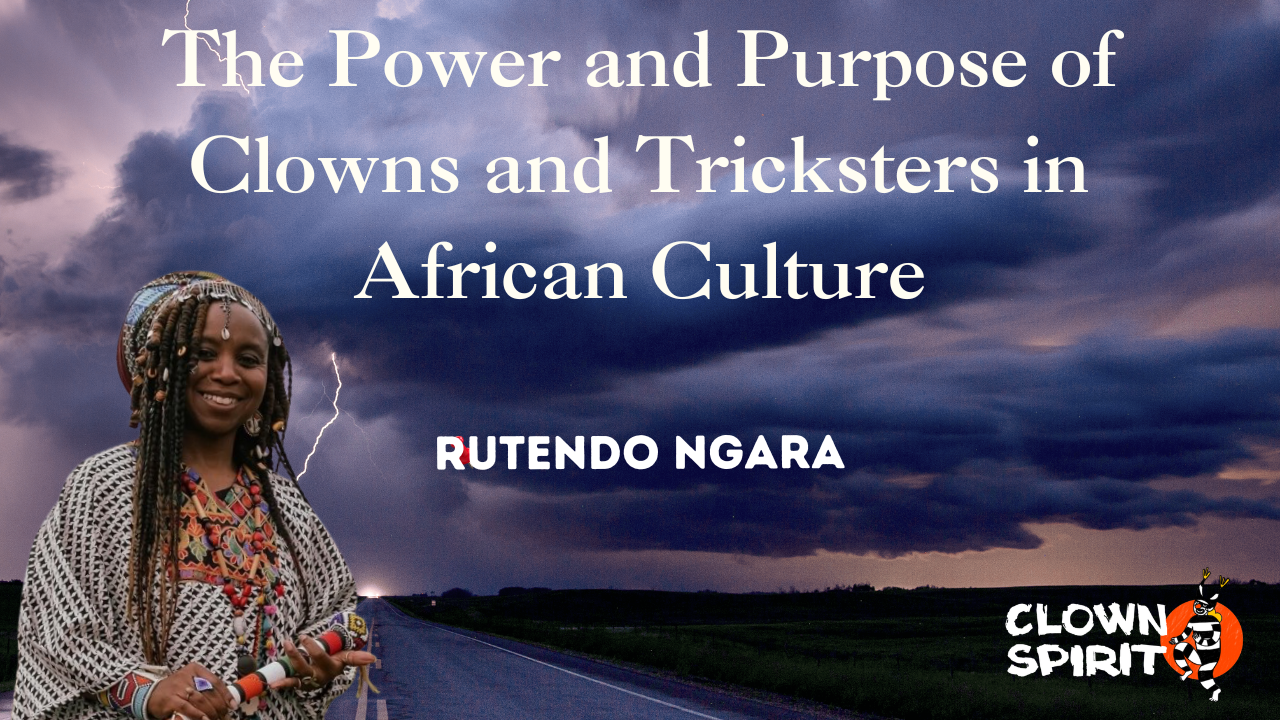
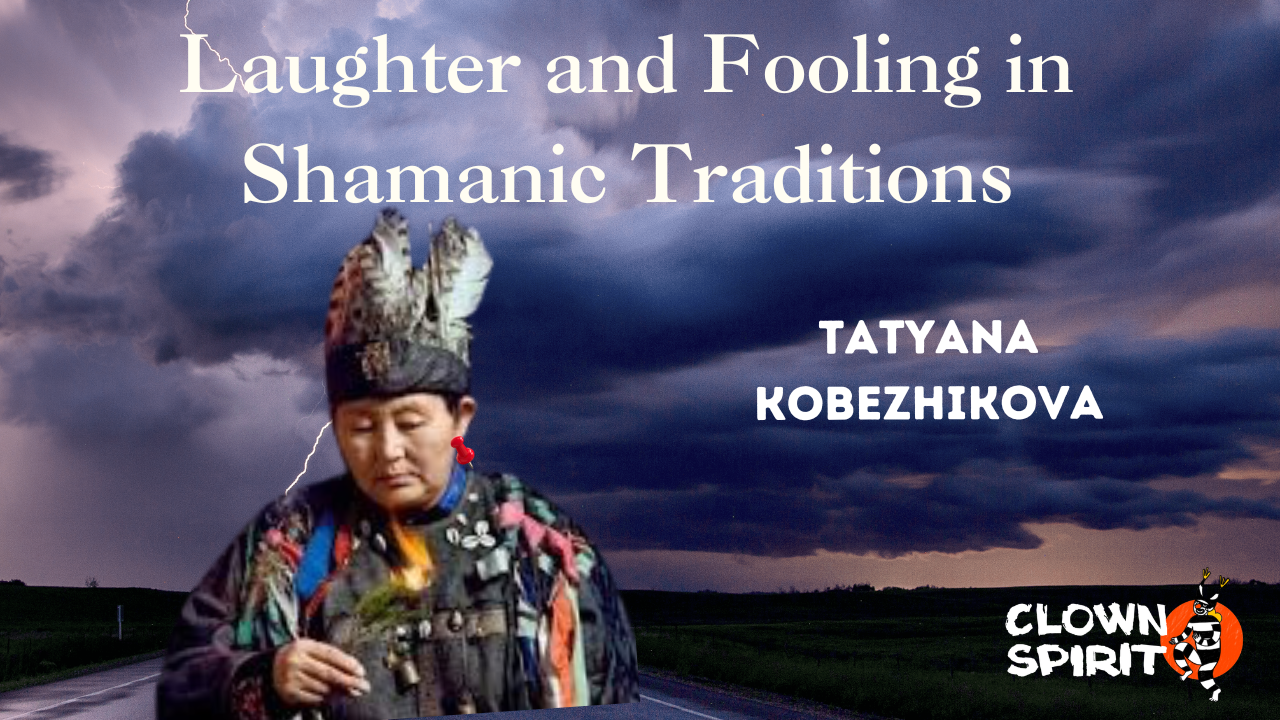
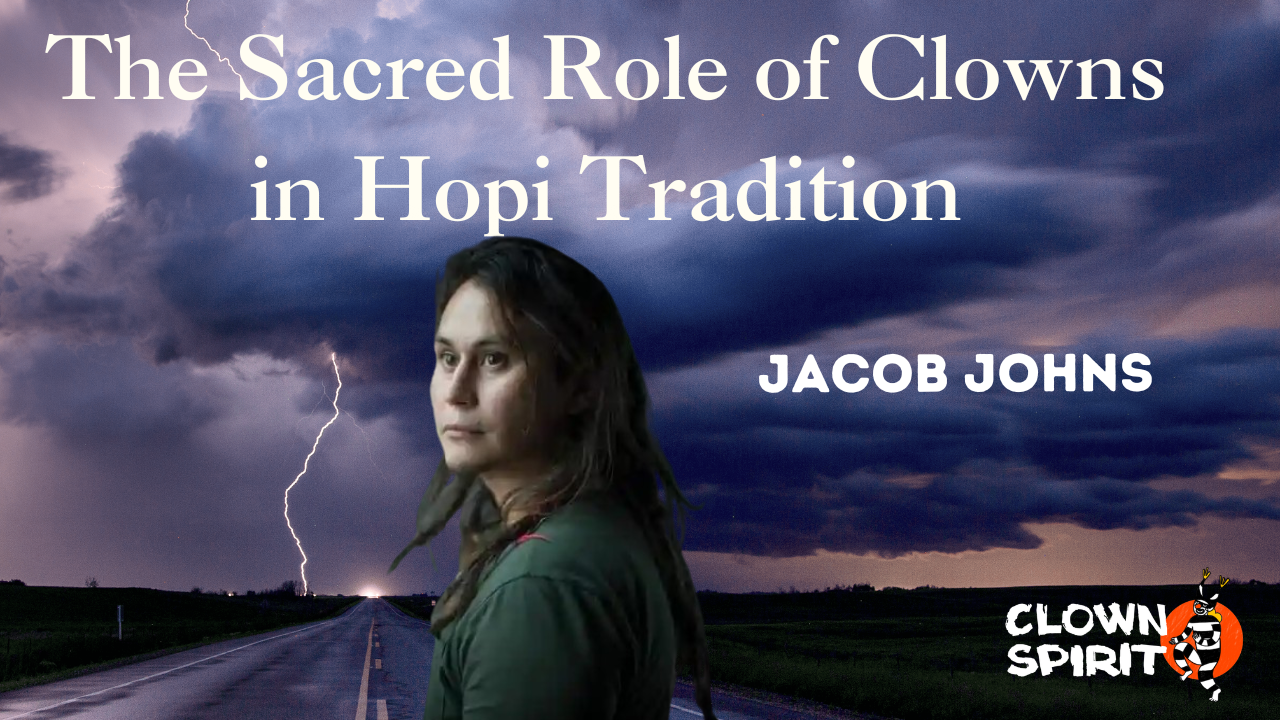
Sacred Clowns from Different Cultures
Below are some examples and stories about different sacred clown figures from different cultures from Elders in the Earthrise Collective.
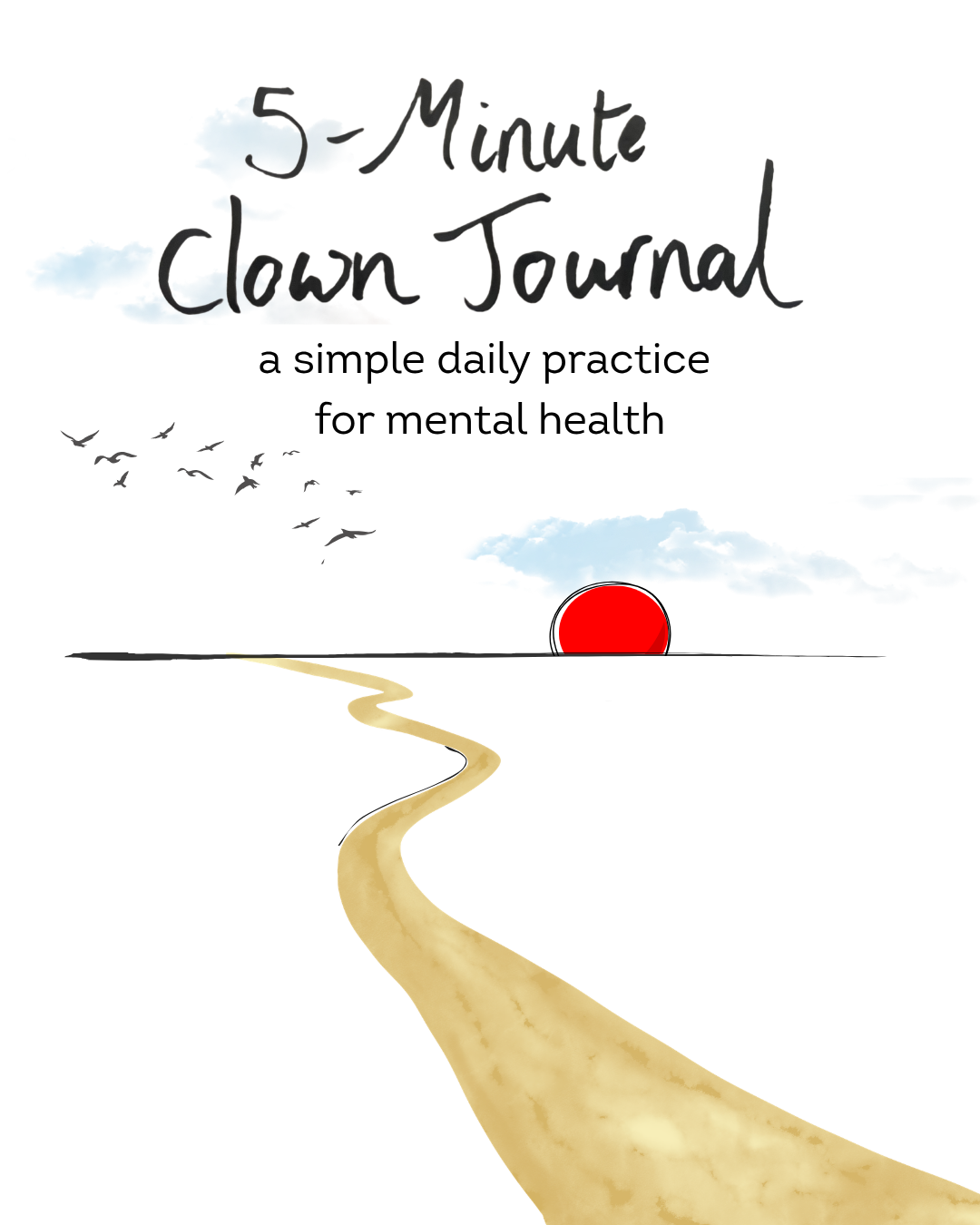
5-Minute Clown Journal
The 5-Minute Clown Journal is a simple practice for slowing down, noticing, and bringing more presence into everyday life. Through a few minutes of playful reflection and observation, the journal invites you to pay attention to what is happening in your body, your surroundings, and your inner world, while approaching yourself with the curiosity and openness of the clown. A small daily practice that can help cultivate awareness, spontaneity, and a deeper connection with the moment.
Tales in Healthcare Clowning
|
What is happening in healthcare clowning around the world right now (April 2026)? This panel offers a global “weather report” on healthcare clowning, with representatives from different regions sharing insights into current practices, challenges, and developments. Rather than focusing on a single thesis, this session provides a broad, informative overview of how healthcare clowning is evolving and what practitioners are witnessing in their respective regions. |
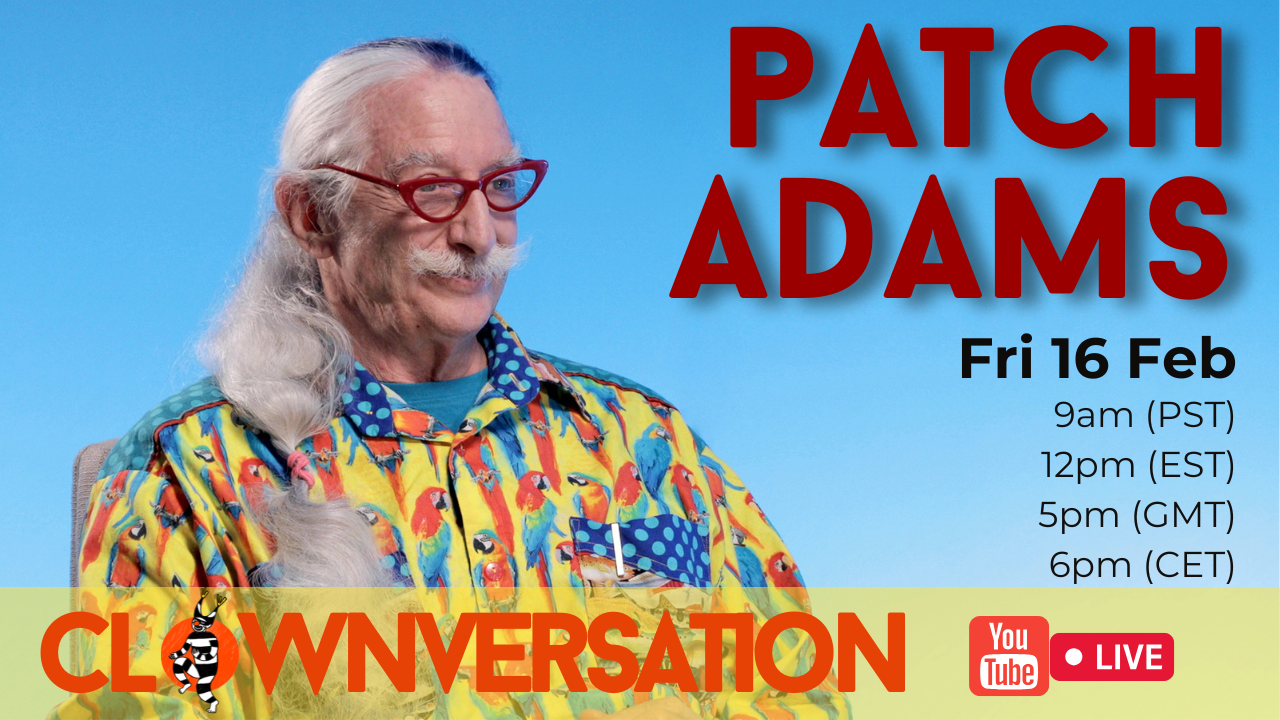
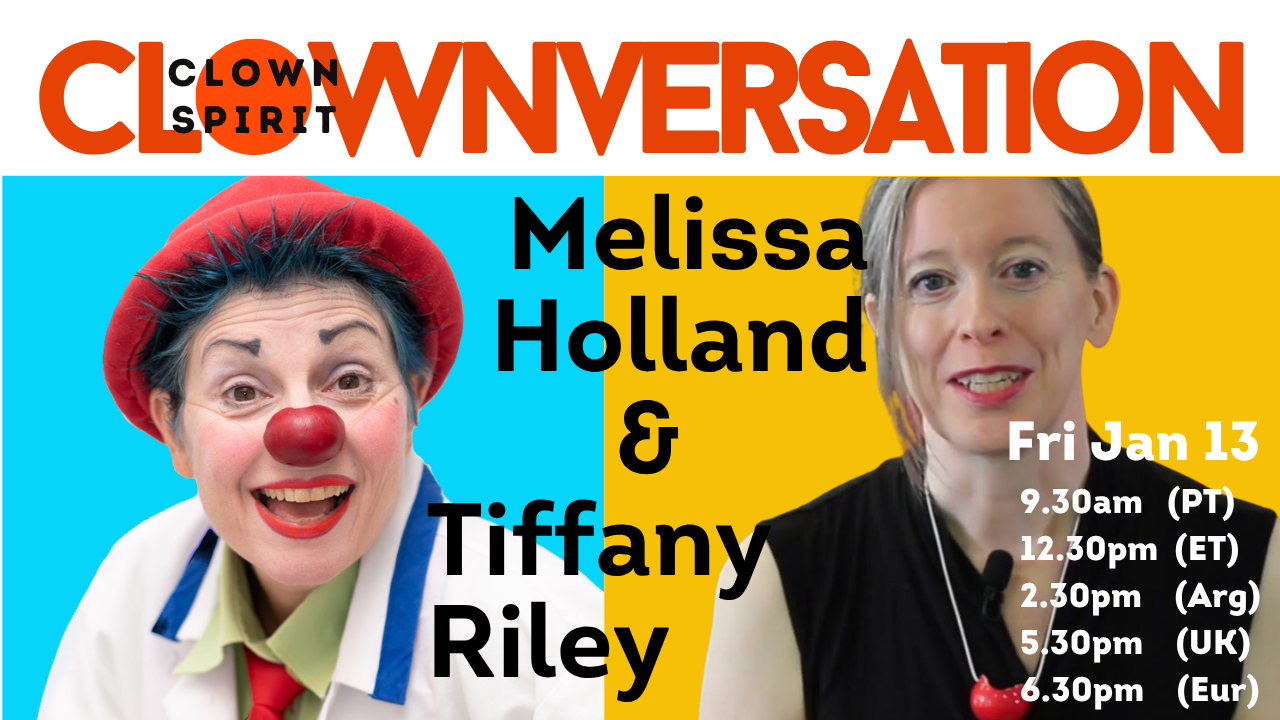
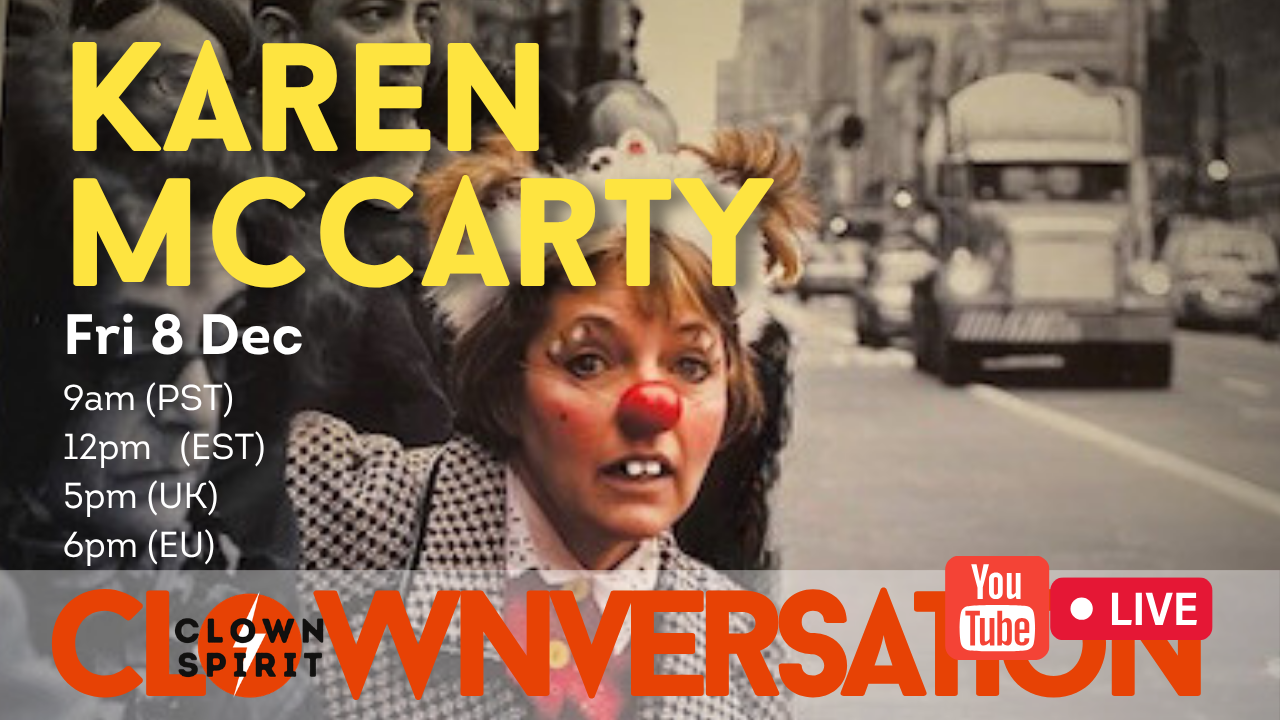
Clownversations
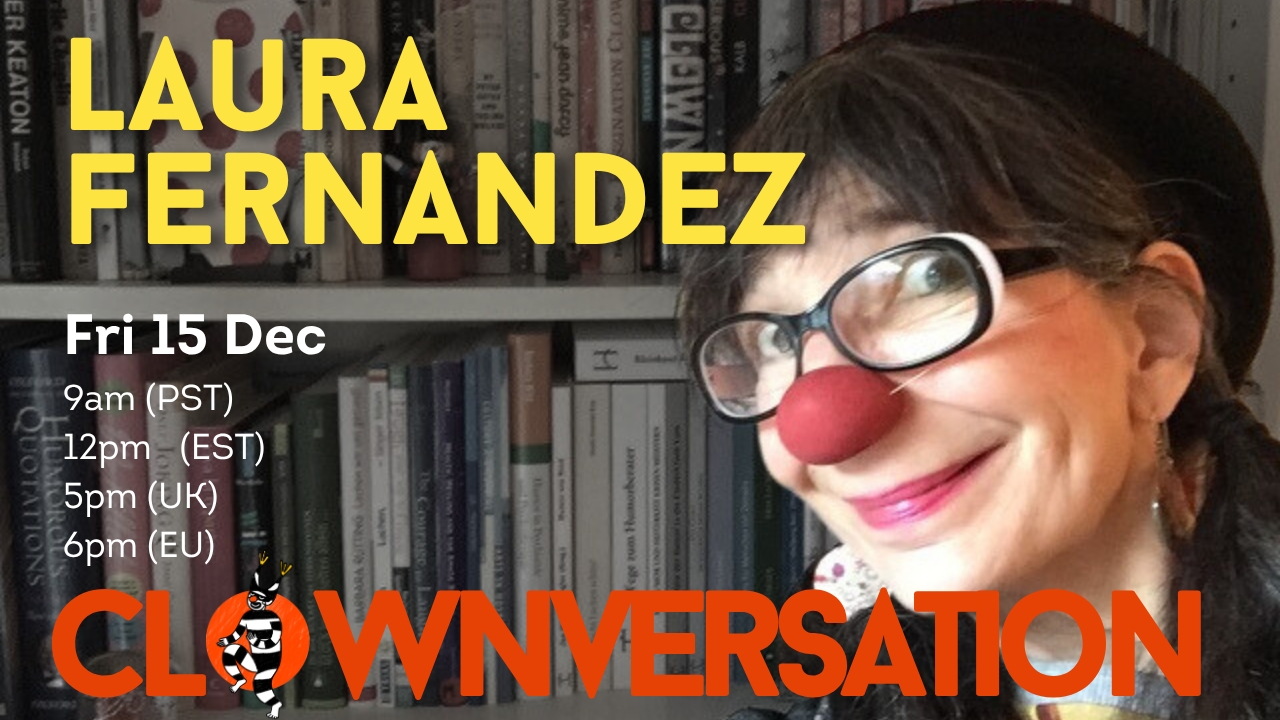
Below are some amazing Clownversations with leaders in Healthcare Clowning! Scroll to see all of them.
Articles
Below are some research articles about healthcare clowning.
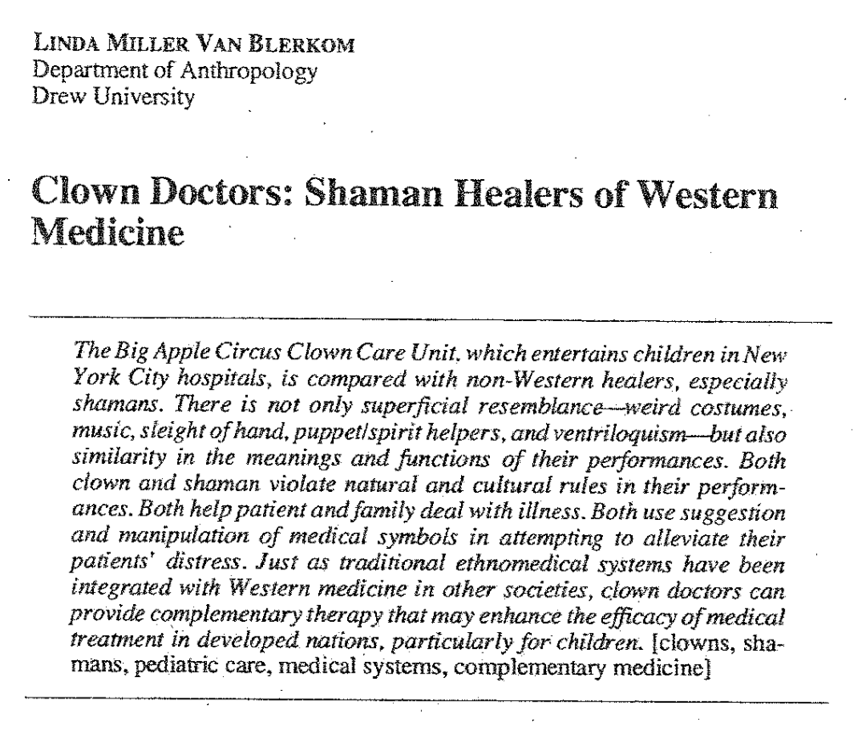
This research summary examines the integration of the Big Apple Circus Clown Care Unit (CCU) into pediatric hospital care, drawing comparisons between clown doctors and traditional shamanic healers.
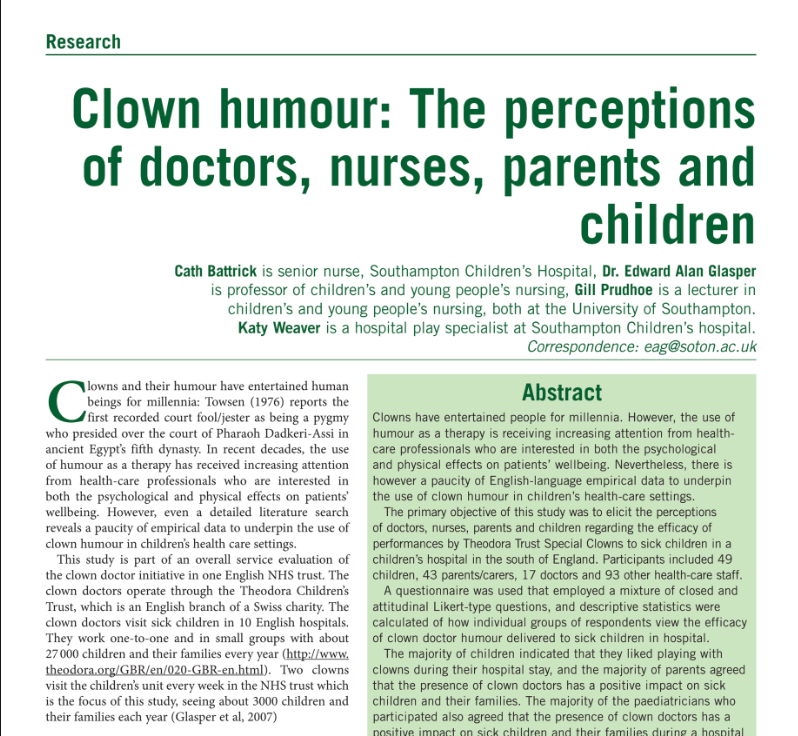
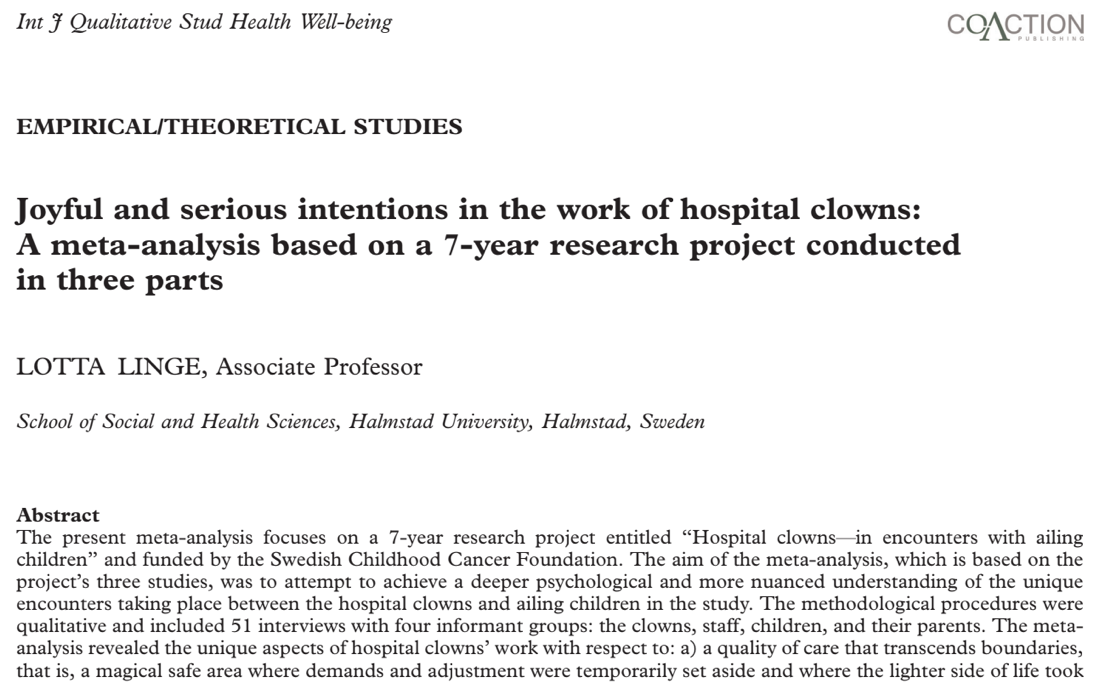
This meta-analysis examines the role of hospital clowns in the care of ailing children, drawing on a 7-year research project conducted in Sweden. The study utilized qualitative interviews with 51 individuals, including clowns, medical staff, children, and parents, to gain a deeper psychological understanding of these encounters.
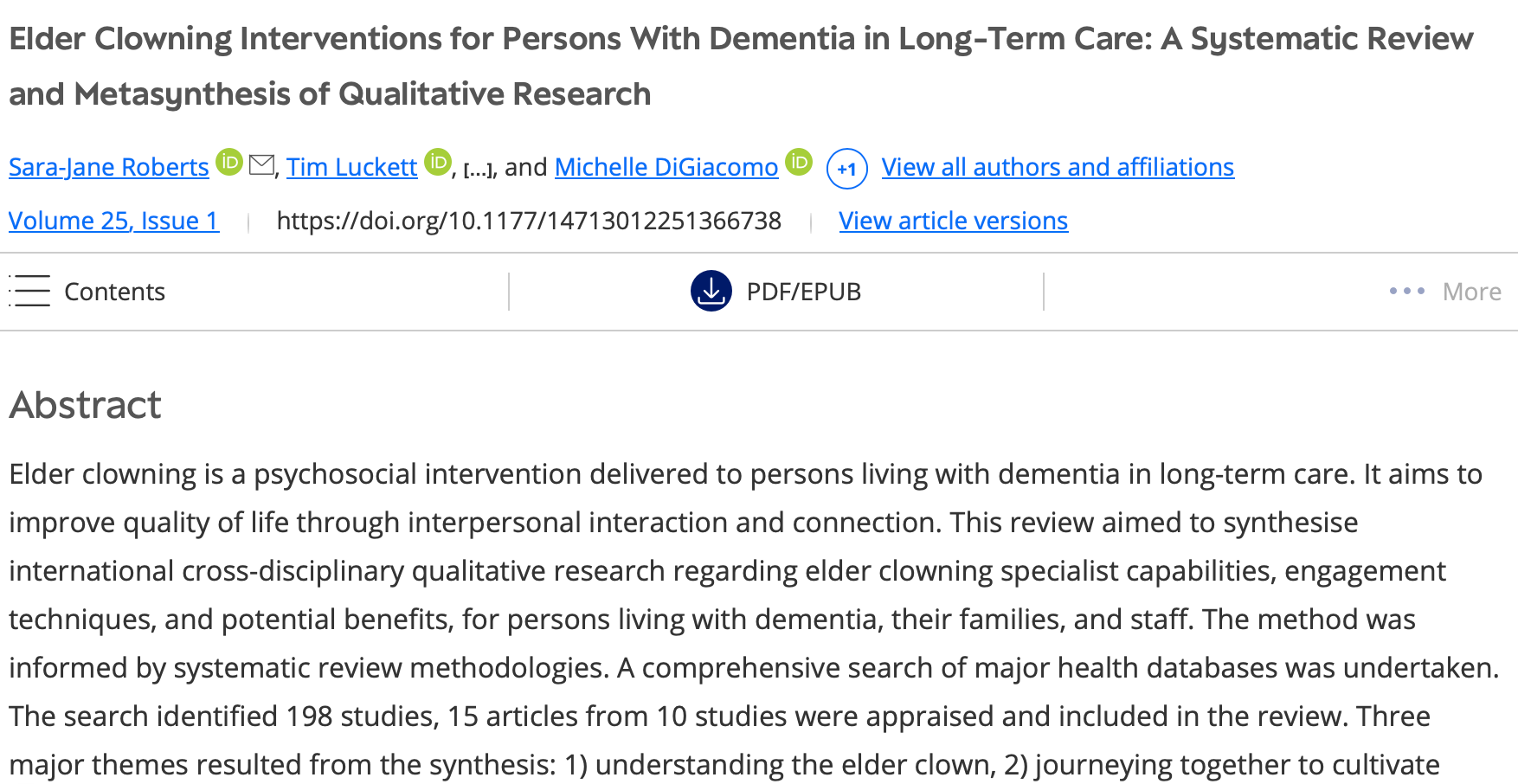
Elder clowning is a psychosocial intervention in long-term care that uses empathic, adaptive clowning to build connection with people living with dementia, supporting wellbeing across cognitive, emotional, social, and behavioural domains through meaningful interpersonal engagement.
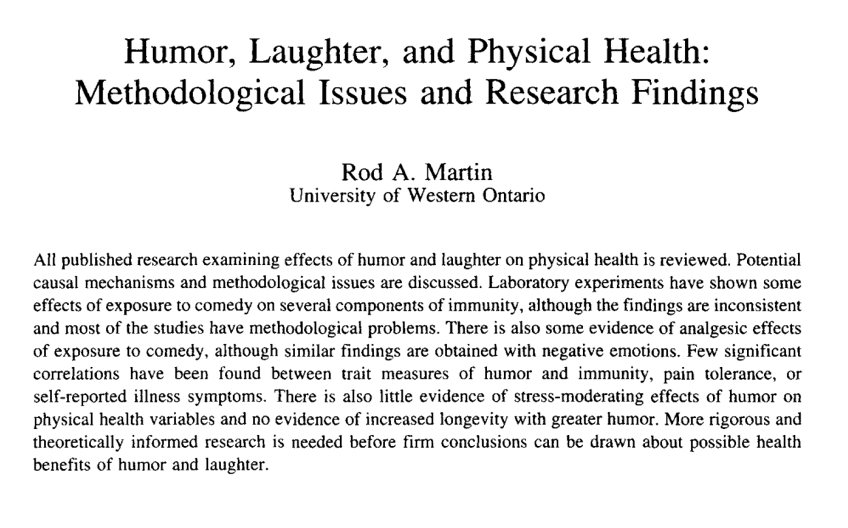
This summary reviews empirical research concerning the effects of humor and laughter on physical health, as discussed by Rod A. Martin.Overview of Research Findings
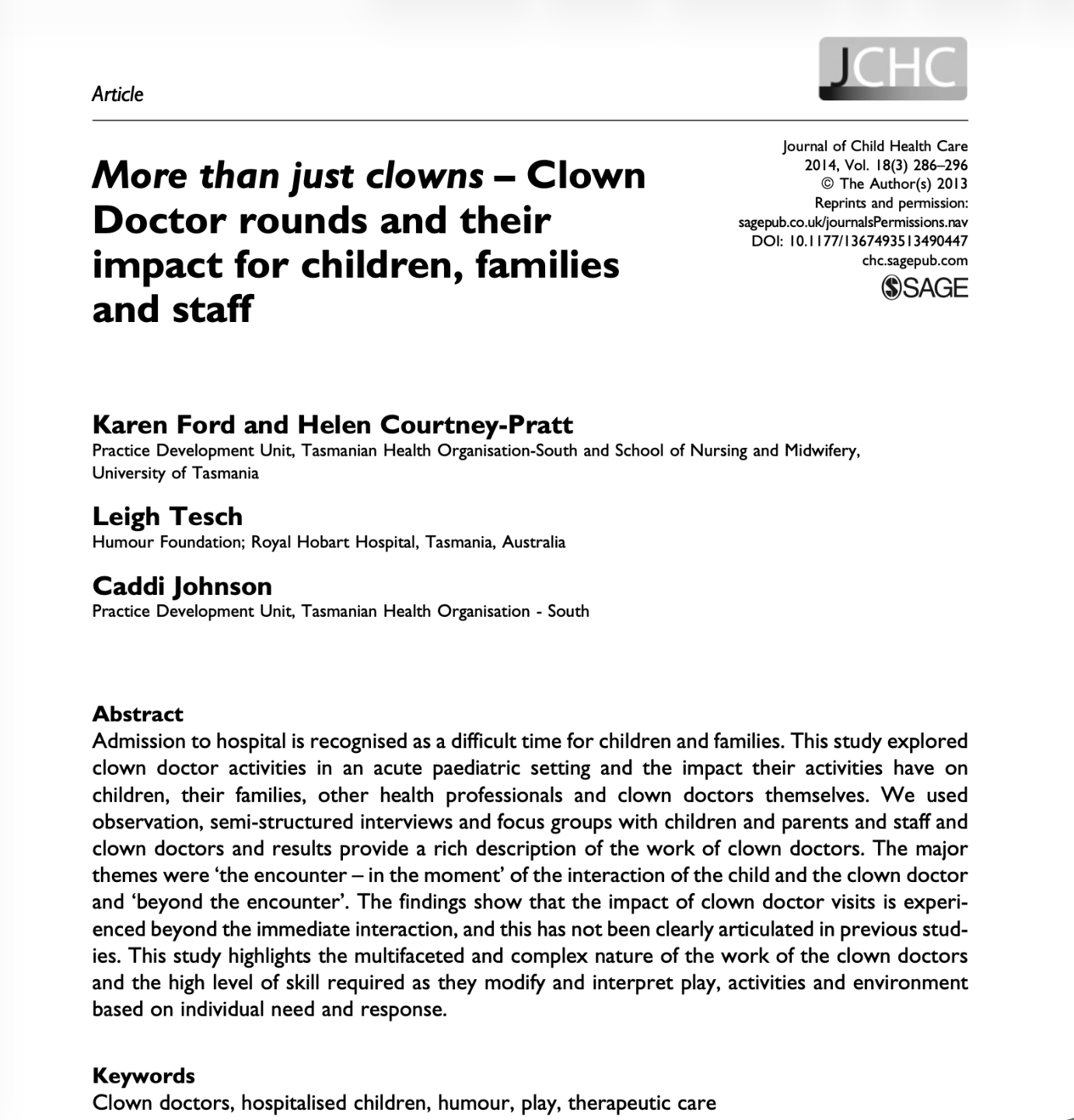
This study explores the role and impact of clown doctors in an acute pediatric hospital setting, where admission is often stressful for children and families. Using observations, interviews, and focus groups with children, parents, staff, and clown doctors, it provides a detailed account of their work.